https://www.youtube.com/watch?v=pWs6PDraHTM
Hi my name is Lily Rosenblum, and I am the director of the suspense and horror film Run. Throughout our film, our group used plenty of small elements that are common to horror films as a means of establishing the genre. For example, we used suspense music that slowly built up in loudness. Such suspenseful, building up music creates a sense of anxiety in viewers that is common to a horror movie. You can see an example of such suspenseful music in the next clip. Moreover, our team added blue tones to the film to create a sense of darkness that naturally creates a sense of fear in viewers. Our team also used costume by giving the predator dark clothes, leaving viewers with a sense of confusion as to who the villain is and why they had no defining attributes that could help anyone identify them. Moreover, our team also used a baseball bat as a prop due to the affiliation with damage and danger. Our team’s video did, however, challenge typical conventions by making the villain a female. Typically, in horror films men are made the villain due to their stereotype as “stronger”, thus our film counters typical conventions.
Our team’s video ultimately represents the social issue of race that is so prevalent in our society. The man being chased in the film is African American which indirectly represents the struggle of African Americans being oppressed in our society.
Our team’s video engages with the audience due to the cliffhanger style of our video and the questions left unanswered. Viewers do not know who the man being chased is, who the predator is, or why the man is being chased by the predator. While viewers see the chase and the moment before the climax of the man being hit, viewers technically do not know what will come next. Does the man get hit? Will he escape? Will viewers get any further background information? Suspense movies tend to leave questions unanswered and slowly build up to showing viewers the deeper meaning of the movie, thus our film opening engages audiences by leaving them to question what direction the movie will be going in.
Given that the characters we chose to use in the film are young, our target audience is younger people who also care about the underlying social issue of racism in the world. Thus, I would like to advertise this movie on various forms of social media such as Instagram, Twitter, and Snapchat as younger individuals tend to use those applications. Moreover, on the basis of convenience, younger people tend to use streaming applications such as Netflix and Hulu, thus I would put the movie on those applications.
In terms of filming itself, I also learned the importance and difficulty of steadying the shot through balancing the camera on objects and keeping a steady hand. Also, I learned the importance of maintaining a steady speed in a tracking shot. Both of these issues were present in the shot shown here, as when we trailed alongside the running actor in the car, we struggled to avoid showing the bumpiness of the ride or moving too fast or slow for the actor. Moreover, I became stronger in my ability to lead a group and tell the actors where to go and what to do in order to best convey the meaning and direction of this film.
Throughout the process of making this film, I grew exponentially in my ability to use software such as “Premier Pro” to edit the film. Prior to the film, I had no idea how to use Premier Pro, but by the end I became aware of how to color correct, fit shots to frame, upload videos in order, and add music and transitions. I also became far more familiar in the process of uploading videos to YouTube as well as using a blog to upload videos/pictures as well as to document my journey.
Monday, April 8, 2019

Friday, March 29, 2019
Final Film Link
https://youtu.be/-Mj4gxLmMAE
Ultimately, our group decided not to change our film due to the nature of the comments that we received on our film. For example, one comment suggested to "stabilize some of the scenes" to remove shakiness. However, as part of the creative vision for this film, my group intentionally allowed the shakiness to make the film seem frantic, as that is how the main character was meant to feel. Another comment requested that we shorten the first scene of the film, however again, as a team we decided that the length of the "man running" scene was important to establish the setting and dark mood of the film. The only other confusion was over context, however our team wanted to leave the beginning of the film with less context to encourage viewers to "continue" watching to find out exactly why the boy was being targeted.
Ultimately, our group decided not to change our film due to the nature of the comments that we received on our film. For example, one comment suggested to "stabilize some of the scenes" to remove shakiness. However, as part of the creative vision for this film, my group intentionally allowed the shakiness to make the film seem frantic, as that is how the main character was meant to feel. Another comment requested that we shorten the first scene of the film, however again, as a team we decided that the length of the "man running" scene was important to establish the setting and dark mood of the film. The only other confusion was over context, however our team wanted to leave the beginning of the film with less context to encourage viewers to "continue" watching to find out exactly why the boy was being targeted.
Friday, March 22, 2019
Saturday, March 16, 2019
Editing Week 2

In this image, our team is selecting a font to begin putting title words on our film. There was a long list of fonts, but we ultimately ended up choosing the font "arial" due to its simplicity and easiness to see. We want the intention of our film to be clear, as well as the credits to be clear, thus this font worked the best to clearly represent our film.

In this film, our team is putting words on the film in a tracking manner. Our film is very dramatic and action oriented, thus our words will be moving across the screen to follow the action of the film. One team member began to write out the words and then paste them onto the screen, allowing the words to move across the screen.

In this image, Maddie and I are working on cutting down the length of some of our shots. In the filming process, we did not realize how monotonous some of our shots would feel, so we had to shorten some of the ongoing shots to maintain viewer interest in the film.
Monday, March 4, 2019
Editing Week One


Monday, February 18, 2019
Film Progress Week Two
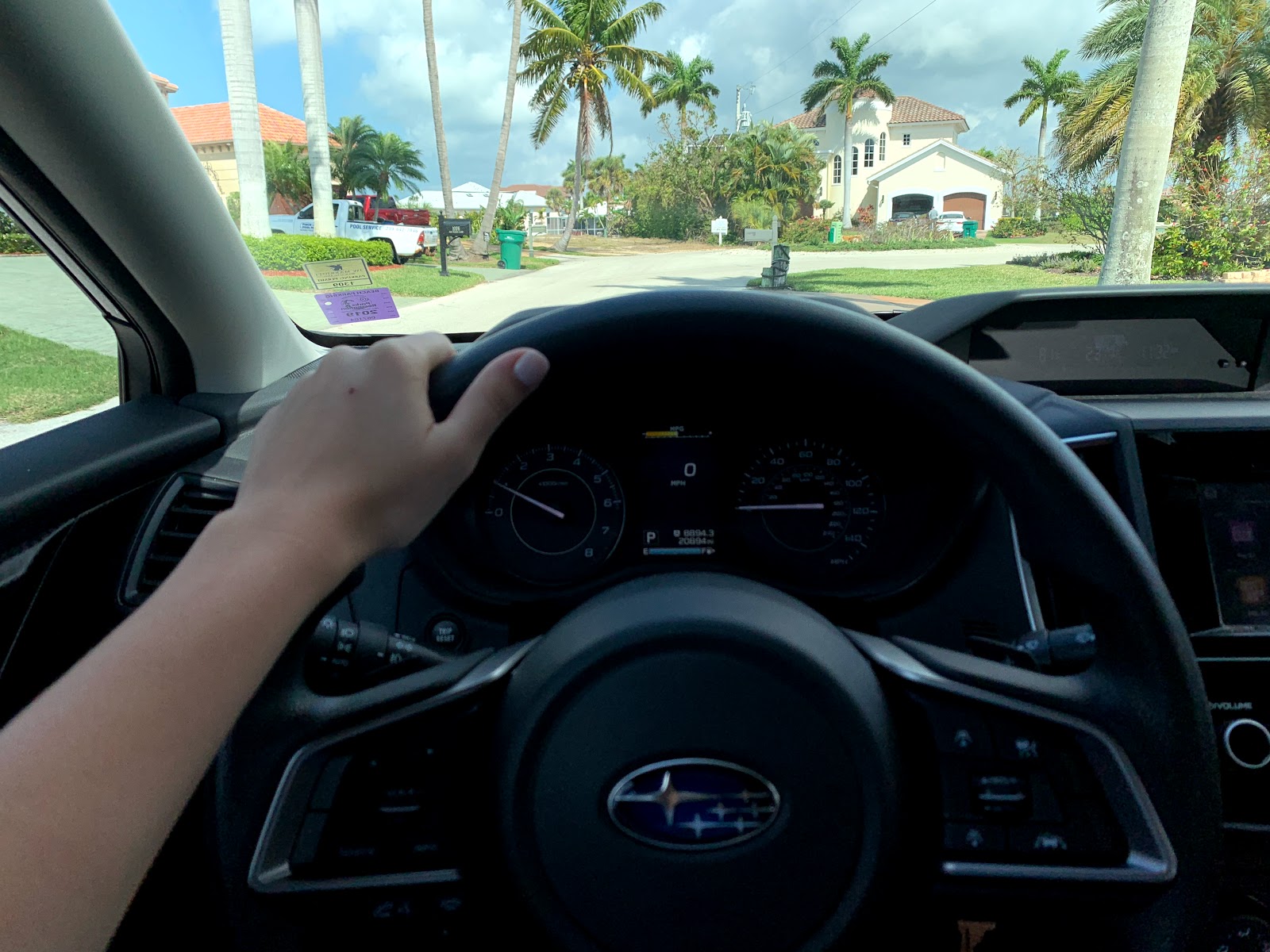
This shot represents a potential "point of view" shot for our film. Part of our film will encompass the murderers chasing after Josh, the victim, in our film. Thus, thus specific shot can be used to show the chase from the murderers point of view which gives viewers a new perspective in the entire plot line. The only problem with this shot is that you can not film and drive at the same time, so the person filming has to try to position the camera so that it looks like the driver is filming.

This location represents our official establishing shot. I like how the length of the road gives a sense of depth to the film as viewers subconsciously recognize that this film will take them for a long road ahead. There are no real issues in this scene except for ensuring that, for the first few seconds of the film, there will be stillness on the road with no other movement so that viewers can fully engulf themselves into the setting.

This picture represents the car chasing shot in our film where the mysterious driver is following/chasing the main character as he runs. The only trouble we may run into with this shot is making sure that the camera is steady enough to clearly capture the shot which can simply be fixed with a camera stabilizer or tripod.
Sunday, February 10, 2019
Filming Week One
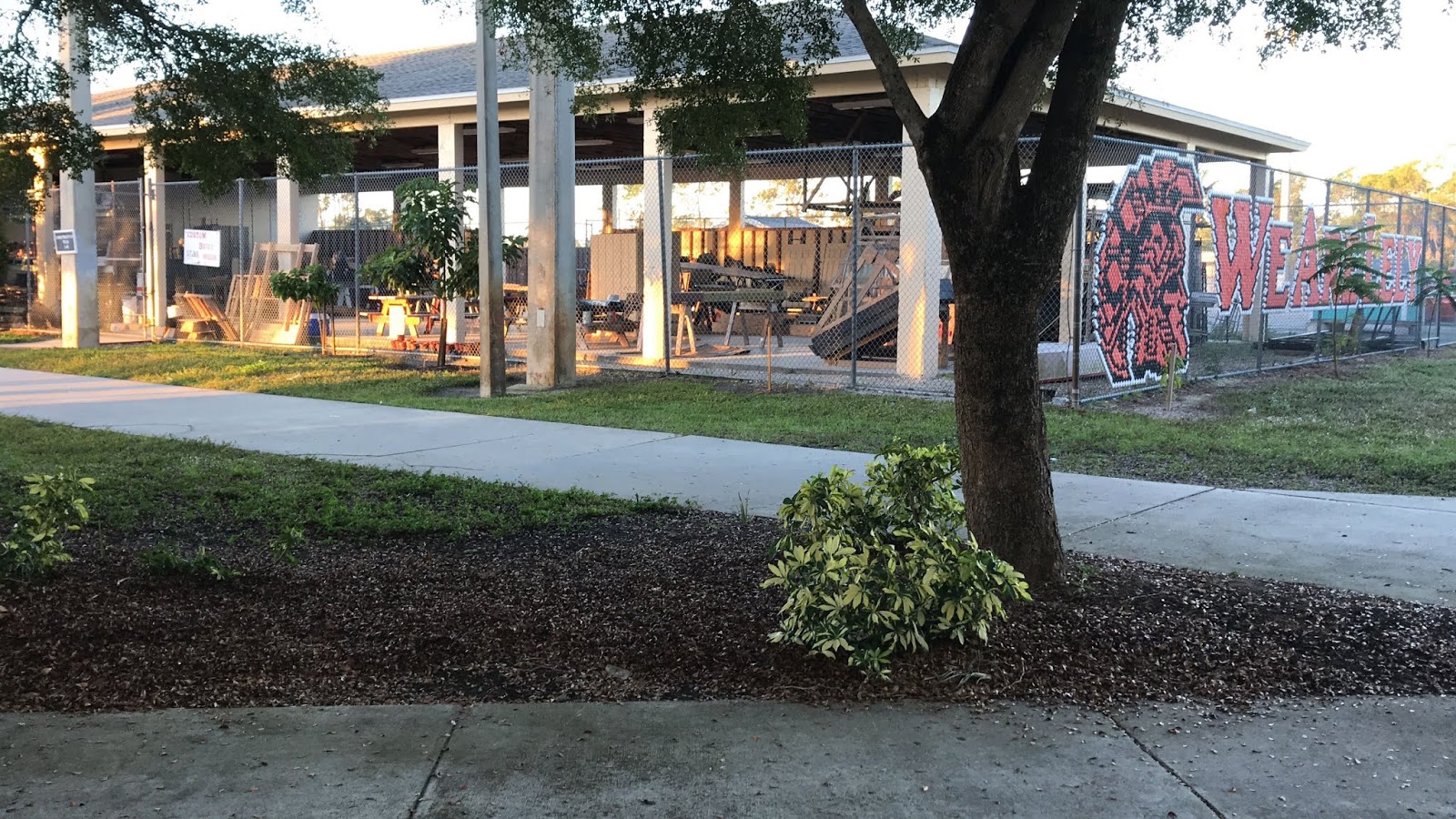
This image represents our establishing shot for our short film that falls under the first scene drawn into our storyboard. Ultimately, our main character will be running down a road before he begins to get chased down, thus this initial establishing shot will set the dark, mysterious scene. Ultimately, we realized that this shot would certainly be implemented into our film, however we need to re-film this scene on a more mysterious dark path at night. This film will not be too difficult to create as we merely need to introduce the setting through a brief panning shot.


This image represents the final scene of our short film in which the main character has been hit over the head with a baseball bat. This shot can simply be filmed through standing above the character to show their unconscious state. Moving forward, we can take the image from a higher angle to encompass more of the ground and create a feeling of isolation that the character is going through as he lays on the ground alone.
Thursday, January 31, 2019
Preparing Film Elements
Aside from our storyboard, this week our team is officially beginning to plan our film. For example, we are now considering exactly what elements will be going into our film including who our actors will be, what film equipment we will need, and what props we may need among other elements. Ultimately, this week we finally have a complete list of what we will require to make this film successful and to convey the mood/theme.
- Actors: Our actors will all be from within our group, including Erin, Josh, and myself. Erin and myself will be playing the murderous criminals, while Josh will play the victim as the innocent runner.
- Costumes: To convey Erin and I's villainous nature, the two of us will simply be wearing dark clothes and masks to create confusion and fear of our identity. Meanwhile, to develop Josh's innocence, he will be wearing plain running clothes.
- Props: The only props we will require will be two cars (we will use Erin's car as well as mine). One car will be following Josh, while the other car will simply turn on its headlights to spook Josh in the beginning of the film and create suspense/foreshadowing. Also, we will require a baseball bat as, in one of the last scenes of the film opening, Erin will swing a bat at Josh to knock him out.
- Locations: Since we will be using a moving car and Josh will be on a run, we will be filming on a dimly lit street on Marco Island as it will likely be quiet and not too busy.
- Dates/times: The film has no specific time period so any weekend coming up will work, and we will be filming in the evening where there is just barely light left in the sky. This darkness with a hint of light will create suspense and fear as the darkness holds feelings of "unknown".
- Scripts: Our film will be not have speaking so as to create suspense, thus the only type of scripting we will need will be directions for the actors as to where they must move and what actions they will need to take. We will be playing music, however, which we will edit to change the intensity and volume to match the mood.
- Film equipment: We will use Maddie's camera, a tripod to stabilize the camera and make smooth scenes, and lighting to clearly show the scenes amid the darkness outside.
Thursday, January 24, 2019
Storyboard

My group began the storyboard process through first thinking of a location and time period for the film. We decided that, to contribute to the mystery of the film, an eerie location in darkness would work the best, thus we decided upon a quiet road in the darkness before dawn. Naturally, we also decided that this shot would be an establishing shot to show the isolation of the location. We also decided that throughout the film, the main character would have music playing and that the music would muffle and vary depending on what was happening in the film to create suspense as more dramatic scenes occur. Furthermore, we had to choose how the course of events would go throughout the film. We eventually decided that the main character would start an early morning run and then go through a variety of encounters with a strange car that would ultimately create suspense and lead up to the final scene in which the character is struck with a bat. Ultimately, the storyboard flows through multiple confusing and nerve wracking scenes that lead up to the climax of the baseball bat that transitions into the title scene. After we decided the course of events, we then decided on the shot types each scene would require. For example, scene five would use an over the shoulder shot as the character looks to see what is following him, so viewers feel the same shock that the character feels as they see everything from his perspective.
In terms of the physical storyboard creation, Maddie helped draw the scenes, Josh and Erin helped to think of the plot, and I helped to consider the different camera angles and sound effects we could implement into the film.
Monday, January 21, 2019
Brainstorming
- I would like to use non-diegetic music that gradually increases in volume, as that tends to provide a feeling of suspense
- I would like to use low key lighting as such lighting will provide a dark, mysterious touch to the mystery film
- I would like to use plenty of over the shoulder shots during action scenes as it will help viewers feel as though, they too, are right in the middle of the drama
- I would like to use close up shots of strange pieces of evidence such as blood drops or various prints
- I would like to implement a clear and relevant title scene that will appropriately introduce viewers to the mysterious elements of the film they are about to watch
- In regard to costume, I would like to implement the use of mysterious effects such as fake blood or fake wounds
- I would like to use flashback to create suspense as viewers try to piece together the relevance between the past and the present
- I would like to use an establishing shot as a means of clearly showing a relevant and thought provoking location that adds to the mystery of the film
One of the first elements I would like to use in our mystery/detective film opening is non-diegetic music, specifically music that gradually increases in volume. This slow volume progression naturally provokes fear and nervousness in viewers that I believe could help further the mysterious feel of the film opening. Furthermore, I would like to use low key lighting that provides a shadowy effect to the film. Shadows can naturally provoke confusion and fear in viewers as they wonder what lays behind the darkness, thus this lighting would be very useful in provoking a sense of mystery in the film opening. Moreover, I plan to employ many over the shoulder shots during moments of action and drama. Over the shoulder shots naturally include viewers into the film as they see first hand what the characters see, thus during action scenes, viewers will be able to identify with the mystery first hand. Close up shots will also be very important, specifically in showing clues that will help piece together the mystery. For example, we can use close ups for elements of the film such as finger/footprints or blood that will force viewers to see the importance of the element in solving the mystery as though they were the detective themselves. This importance will come naturally, as close ups automatically force viewers to see the element with more attention. Also, through watching the film openings I noticed the importance of a title scene in which the title is shown. Through a good title and title scene that represents the film through elements such as font or background, the whole film can be set up properly through accurately showing viewers what to expect. I also anticipate using specific elements of costume including fake blood/wounds so as to authenticate the sometimes bloody reality of mystery in real life. Our team will likely also use flashback to create suspense as viewers may feel a sense of wonder or anxiety as they put together the past with the current and see the ties. Finally, we may use an establishing shot to help show viewers exactly where the film will take place. Through this shot, if we use a location that provokes mystery such as a dark alley or abandoned area, viewers will automatically understand that this film will be one of mysterious elements.
Friday, January 11, 2019
What Inspired Me?
Usually upon watching movies with my friends, especially in large groups, we find ourselves giggling and quietly chatting throughout the film. One specific occurrence, however, failed to follow that normalcy. That occurrence was when we all watched Murder on the Orient Express. Having had no previous interest in detective or mystery films, I was shocked to see just how enthralled my friends and, specifically I, were upon watching this film that sparked my interest in the detective/mystery genre. Starting with the very beginning of the film, viewers are immediately thrown into a world of well executed confusion. For example, viewers are first exposed to a close up image of a timer which quickly gives a rushed feeling and then of a close up of eggs which gives a feeling of fragility. This feeling of rush and fragility make viewers feel confused immediately which further advances the mysterious ideals of a detective/mystery film. Similarly, viewers prepare themselves for the setting to be train related (due to the title Murder on the Orient Express), so when the film opens with an establishing shot in a bustling area in Jerusalem, specifically in a place of religious importance, viewers cannot help but wonder what the importance of the initial location may be. Finally, the beginning of the film features a non-diegetic bell sound which works to further the feeling of rushing and consciousness of time that is typical of a mystery/detective film. Ultimately, all of the features in the opening of this film help to create a sense of confusion as none of the pieces seem to make sense. I truly enjoyed the confusion created in the beginning of this film because my lack of understanding only encouraged me to keep watching to find out more and figure out the mystery.
In the opening of the movie Se7en, a similar use of close ups and confusion are implemented. For example, in the opening credits, viewers witness close ups of a razor blade gracing the hand of an unknown man, a close up of a frightening sketch, a close up of a journal, and close up clips of words in a book being blacked out. Personally, I feel that a good detective movie should be confusing yet related in the beginning so that viewers cannot help but keep watching to find out more. This movie encompasses that entire idea, as there are clear themes of writing and gore, yet we do not know what direction this movie is heading. On top of all of those factors, there is ominous non-diegetic music that gradually increases in an uncomfortable way playing as the random close up clips are shown. Ultimately, between the frightening music and the confusing yet dark close ups, viewers are not only anxious, but they are ready to move forward with the movie to figure out the connections.
Through watching Murder on the Orient Express and Se7en, I became enlightened on how exciting it can be to view a movie whose pieces slowly fall together as opposed to predictable, cliche movies. Detective movies do not typically follow cliches, and thus can take a variety of turns. Such options of ambiguity excite me, and thus helped me chose detective/mystery as my genre for my AICE Media Studies film opening.
In the opening of the movie Se7en, a similar use of close ups and confusion are implemented. For example, in the opening credits, viewers witness close ups of a razor blade gracing the hand of an unknown man, a close up of a frightening sketch, a close up of a journal, and close up clips of words in a book being blacked out. Personally, I feel that a good detective movie should be confusing yet related in the beginning so that viewers cannot help but keep watching to find out more. This movie encompasses that entire idea, as there are clear themes of writing and gore, yet we do not know what direction this movie is heading. On top of all of those factors, there is ominous non-diegetic music that gradually increases in an uncomfortable way playing as the random close up clips are shown. Ultimately, between the frightening music and the confusing yet dark close ups, viewers are not only anxious, but they are ready to move forward with the movie to figure out the connections.
Through watching Murder on the Orient Express and Se7en, I became enlightened on how exciting it can be to view a movie whose pieces slowly fall together as opposed to predictable, cliche movies. Detective movies do not typically follow cliches, and thus can take a variety of turns. Such options of ambiguity excite me, and thus helped me chose detective/mystery as my genre for my AICE Media Studies film opening.
Tuesday, December 18, 2018
My Film Opening Project - Genre and Group Members
I will work with Erin Watson, Maddie Hopkins, and Josh Young on a film with the mystery/detective genre.
Thursday, December 6, 2018
Film Opening Research #2 - The Sound of Music
1.) How many titles are displayed during the opening sequences to the film?
There are no title screens that are displayed in the opening sequence of this film.
2.) What images are prioritized in the opening sequence?
The images prioritized in the opening scene of this film are of the mountains, the streams, the greenery of the land, and the woman.
3.) What connotations do the images carry?
The images of the nature and sweet looking woman carry feelings of freedom, comfort, adventure, and joy.
4.) How is genre reinforced through symbolic and technical codes from the outset?
The genre of this film is a musical which contains music and dance. The use of sound through the woman singing and acting through choreography are the first two main components of a musical that are found in this film. Also, the use of bright lighting and natural scenery help to give this musical a sense of joy and freedom that can typically be found in a happier musical.
5.) How does the film establish an enigma from the outset?
The opening of this film creates a sense of mystery from the very beginning due to the lack of information given about what viewers are watching. For example, while we see and hear a beautiful, singing woman, we do not know who she is. Moreover, the beautiful land around her is undefined, so viewers can not even point out her exact location. Also, the lyrics to the song help to create a sense of wonder. For example, through the song viewers learn of the main character that the hills "fill her heart" and that sometimes her "heart is lonely". This information leaves viewers wondering about the main character's backstory and how she feels.
6.) What strategies are used to ensure the film appeals to its target audience?
The film is a musical, and multiple strategies are used to convey such components of a musical. For example, the use of music and dance help to make this film a musical which is likely why viewers would choose to watch the film to begin with. Also, the film uses bright lighting for the natural and sprawling landscape that bring the happy and upbeat sense of a musical that many look out for.
7.) Has technology been used effectively?
It should be noted that this film was created in the 1960s, thus the technology was not as developed as it is today. However, the technology in the camera work is effective in creating and developing the musical genre. For example, the arial shot at the beginning of the film helps to establish the setting which is one of sprawling and bright hills. Such an adventurous setting is typical of a musical. Furthermore, the camera tracks the woman as she sings which helps to allow viewers a more personal approach to listening to the woman's feelings. Moreover, the tilt shot that looks up upon the woman as she gazes away helps viewers to understand her longing as she sings.
Film Opening Research #1 - Murder on the Orient Express
1.) How many titles are displayed during the opening sequences to the film?
One title is shown in the film opening, and it is blue, ambient letters that say "Murder on the Orient Express" amid a black screen. The bright lettering amid such a dark and blank screen may help to show how, later on, there will be an isolated and mysterious attack.
2.) What images are prioritized in the opening sequence?
The first image prioritized in the opening scene is the "Wailing Wall" in Jerusalem. Specifically, there is a little boy running through the Jerusalem town into a kitchen. In the kitchen, viewers see eggs, a timer, and a warm interaction between the egg-carrying boy and a man with a curly mustache.
3.) What connotations do the images carry?
The timer gives a feeling of a time limit and rush, where similarly, the eggs give a feeling of fragility. Viewers feel nervous and rushed, but yet with a sense of protection over the eggs.
4.) How is genre reinforced through symbolic and technical codes from the outset?
The symbolic code of location is important in this as the mysterious yet bustling land helps to develop a sense of urgency and mystery. In terms of sound, the bells at the beginning of the film make viewers feel rushed and conscious of time which too, makes viewers wonder where this mysterious film is going. Mystery films have smaller parts that come together, where in this case, the mysterious aspects of the film are meant to later come together to tell a more complete story. Similarly, the quick paced music following the little boy helps to further the mysterious rush. Also, the use of darker colors in the strange, picky man's office creates a sense of wonder around him that is typical of characters found in a mystery film.
5.) How does the film establish an enigma from the outset?
An enigma is a mystery, and the film creates a sense of mystery in the beginning through a variety of factors. For example, viewers do not know much about the setting, who the characters are, much about the little boy nor why he is exactly rushing, what the importance of the eggs are, or why there is such a time rush.
6.) What strategies are used to ensure the film appeals to its target audience?
Given that this film is a mystery film, the various random objects, strange setting, and undefined characters set viewers up immediately for confusion and an inquiry of what could possibly come next.
7.) How has technology been used effectively?
Technology has been used effectively through the camera shots that made these scenes stronger. For example, the establishing shot was used to show the mysterious setting and a close up introduced viewers to the sand timer that also leads to a great amount of wonder. Also, the use of long shot helps to show the quick little boy among a multitude of adults in this strange land that creates even more question. For example, why is he running, where is he running to, and who is he?
Friday, November 30, 2018


Sunday, November 11, 2018


Wednesday, October 31, 2018
Film Viewing Practice Essay
Word Count: 675
Throughout the movie Agent Carter from Marvel, there are noticeable aspects of editing, music, camera shots/angles, and mise-en-scène. Each of these film components contribute to the meaning of the plot as a whole, and ultimately help the filmmaker enhance the storyline.
To start, the film uses the editing technique of parallelism which highlights the differences and similarities between two scenes. In this case, viewers see alternating shots between Peggy and Steve as Peggy sits in an office and Steve is flying an aircraft that is in the line of danger. The similarities between these shots is the panic that is evident in the subjects’ faces, as well as the dramatic orchestra music that follows through with each shot. As for differences, Peggy is in an evidently less threatening environment whereas Steve appears to have his life on the line in the aircraft. This technique enhances the film because it shows how interconnected the characters are emotionally despite being physically separated. Also, leitmotif, which is a shot with a recurring theme, can be seen in the Marvel introduction sequence. This sequence is shown at the start of all Marvel movies, and the sequence sets viewers up with an expectation of the movie through general Marvel themes.
Sound is another technique that is employed in this film, where the film starts off using nonsimultaneous sound. Nonsimultaneous sound is sound in a film that takes place at a different point than in the specific scene it is used in. Non simultaneous sound occurs in the beginning of this film through sound of Steve and Peggy frantically radioing to each other during the flip scene of the Marvel introduction. This sound is important because it sets the film up for a sense of urgency and panic by making the very first scene inclusive of such a panic. Also, non-diegetic sound is used in the beginning of the film through emotional violin music. This sound was added in after the film, and it adds a sense of emotion and pain that the characters are feeling upon Steve’s situation because violin music is incorporated with sadness. Finally, a sound bridge is used to connect the scene from the fighter aircraft to the establishing shot of the city. This carrying of sound helps to relate the scenes which shows how the problems from the original shot are carrying on through time.
Moreover, certain camera shots and angles were used in the film to convey the meaning of the story better. For example, an establishing shot, which is a shot used to set the scene, is used when a wide view of the city is first shown. This view helps viewers to recognize that the setting is NYC, which is a bustling city full of life and action, where intense action will eventually occur for the characters. Also, an over the shoulder shot is used as the two men in Peggy’s case speak to her and as Peggy speaks back to them. This use of over the shoulder in two different ways helps to put the two parties on a more equal playing field, as Peggy is not any weaker than the men.
Finally, aspects of mise-en-scène can also be viewed in this movie. For example, low key lighting with darkness and shadowing is used in the office. This use of lighting develops an understanding that the workers there handle “dark” business, and that for Peggy, this is not necessarily a happy, welcoming place. At one point, however, Peggy is discussing her future with her boss, where the lighting appears of a higher key (ex: brighter lighting with less shadows) which symbolizes hope and joy for her future. Also, in regard to staging, there is a use of blocking in which all of Peggy’s male coworkers are placed near each other as she stands alone which shows how for this time period, men were considered more dominant.
Ultimately, the filmmaker of Agent Carter employed aspects of editing, sound, camera shots/angles, and mise-en-scène to help convey the emotions and meaning the story.
Sunday, October 28, 2018


Saturday, October 20, 2018
Mise en Scène - Legally Blonde Movie
I chose to watch the movie "Legally Blonde" in an attempt to analyze aspects of mise en scène, which include costume, setting, staging, and lighting.
1.) Costume: The use of costume both in the beginning and end of the film help to convey the story of the transformation of Elle from a silly sorority member to a sophisticated lawyer. Elle begins by wearing wildly patterned, bright clothes such as crop tops, tight dresses, and short shorts before she becomes a lawyer. However, after Elle becomes a lawyer, she begins to dress in a more reserved fashion by wearing business outfits such as cardigans, professional pencil skirts, and collared shirts. The outfits still have tinges of pink and purple, which are Elle's favorite colors, which shows how Elle had a transformation, but that she also maintained her sense of self throughout the process.
2.) Setting: The set designers from this movie chose to use setting in a similar way to how costume was used. The beginning of the movie takes places in a bustling sorority house, with bright, colorful furniture and silly decorations. The house has many rooms filled with girls, games, and partying. At the end of the movie, however, when Elle becomes a lawyer and attends Harvard, the setting completely changes. Elle is in and out of dark and serious court rooms as well as classrooms, and is surrounded by serious lawyers and students alike. These two settings visually show Elle's two different mindsets throughout the movie, which are mindsets first of partying, and then of seriousness.
3.) Staging and acting: In terms of staging and acting, Reese Witherspoon (the actress who plays Elle) used method acting. At the beginning of the film, Reese truly personifies Elle by raising her voice in a high pitched tone, wearing glitzy clothing and accessories, and using silly hand and body movements. All of this acting helps to create the initial portrayal of Elle, which is a goofy and immature character. Also, the use of blocking through character placement helps to show Elle's transformation throughout the movie. For example, when Elle is taking her LSAT test to get into law school, she is placed right in the middle of hundreds of other potential law students which shows how, in that moment, she is lost amidst others and does not know where she stands quite yet. However, later on once Elle is in law school, she sits right in the front of the class, and thus in front of her classmates. This placement shows how Elle is truly a go-getter and that she is willing to work hard to achieve her goals of coming in "first".
4.) Lighting: When Elle is still caught up in her lifestyle as a sorority girl, high-key lighting is used frequently. Whether Elle is at the well lit pool or at a fancy boutique, Elle is casted in bright, low shadow lighting. This use of lighting helps to show how, at that point in her life, Elle was nearly immune to the struggles of the outside world as her concerns were typically immature and not serious, thus her life was bright and bubbly. However, after Elle begins attending Harvard Law School and entering the court rooms, there is low-key lighting that features darkness and shadows. This use of lighting is important in showing how Elle's life has become increasingly difficult and serious, as darker colors and lighting are far more serious than happier, lighter colors and lights. Again, this use of lighting helps to visually show Elle's transition into a more mature individual through her education.
1.) Costume: The use of costume both in the beginning and end of the film help to convey the story of the transformation of Elle from a silly sorority member to a sophisticated lawyer. Elle begins by wearing wildly patterned, bright clothes such as crop tops, tight dresses, and short shorts before she becomes a lawyer. However, after Elle becomes a lawyer, she begins to dress in a more reserved fashion by wearing business outfits such as cardigans, professional pencil skirts, and collared shirts. The outfits still have tinges of pink and purple, which are Elle's favorite colors, which shows how Elle had a transformation, but that she also maintained her sense of self throughout the process.
2.) Setting: The set designers from this movie chose to use setting in a similar way to how costume was used. The beginning of the movie takes places in a bustling sorority house, with bright, colorful furniture and silly decorations. The house has many rooms filled with girls, games, and partying. At the end of the movie, however, when Elle becomes a lawyer and attends Harvard, the setting completely changes. Elle is in and out of dark and serious court rooms as well as classrooms, and is surrounded by serious lawyers and students alike. These two settings visually show Elle's two different mindsets throughout the movie, which are mindsets first of partying, and then of seriousness.
3.) Staging and acting: In terms of staging and acting, Reese Witherspoon (the actress who plays Elle) used method acting. At the beginning of the film, Reese truly personifies Elle by raising her voice in a high pitched tone, wearing glitzy clothing and accessories, and using silly hand and body movements. All of this acting helps to create the initial portrayal of Elle, which is a goofy and immature character. Also, the use of blocking through character placement helps to show Elle's transformation throughout the movie. For example, when Elle is taking her LSAT test to get into law school, she is placed right in the middle of hundreds of other potential law students which shows how, in that moment, she is lost amidst others and does not know where she stands quite yet. However, later on once Elle is in law school, she sits right in the front of the class, and thus in front of her classmates. This placement shows how Elle is truly a go-getter and that she is willing to work hard to achieve her goals of coming in "first".
4.) Lighting: When Elle is still caught up in her lifestyle as a sorority girl, high-key lighting is used frequently. Whether Elle is at the well lit pool or at a fancy boutique, Elle is casted in bright, low shadow lighting. This use of lighting helps to show how, at that point in her life, Elle was nearly immune to the struggles of the outside world as her concerns were typically immature and not serious, thus her life was bright and bubbly. However, after Elle begins attending Harvard Law School and entering the court rooms, there is low-key lighting that features darkness and shadows. This use of lighting is important in showing how Elle's life has become increasingly difficult and serious, as darker colors and lighting are far more serious than happier, lighter colors and lights. Again, this use of lighting helps to visually show Elle's transition into a more mature individual through her education.
Subscribe to:
Posts (Atom)